Crea y Crece Law · B2B
E-invoicing is coming. Without you lifting a finger
The Crea y Crece Law requires invoices to be issued and received in a structured electronic format in all B2B transactions. autonomia360 converts your invoices to the right format, sends them and tracks their status — no jargon.
What you should know
What changes with e-invoicing
It's not just a signed PDF. E-invoicing is a technical standard that changes how every transaction between businesses is exchanged, verified and stored.
A structured format, not a PDF
An e-invoice is a digital document (Facturae 3.2.x or UBL 2.1) that your client's system can read and process automatically. A PDF sent by email doesn't count, even a signed one.
Mandatory in B2B transactions
The Crea y Crece Law (Law 18/2022) extends the obligation to issue and receive e-invoices to every transaction between companies and freelancers. Royal Decree 238/2026 sets out the system; the obligation will apply in stages once the ministerial order completing the technical framework comes into force: 12 months for companies with turnover above €8 million and 24 months for everyone else, freelancers included.
Real-time status tracking
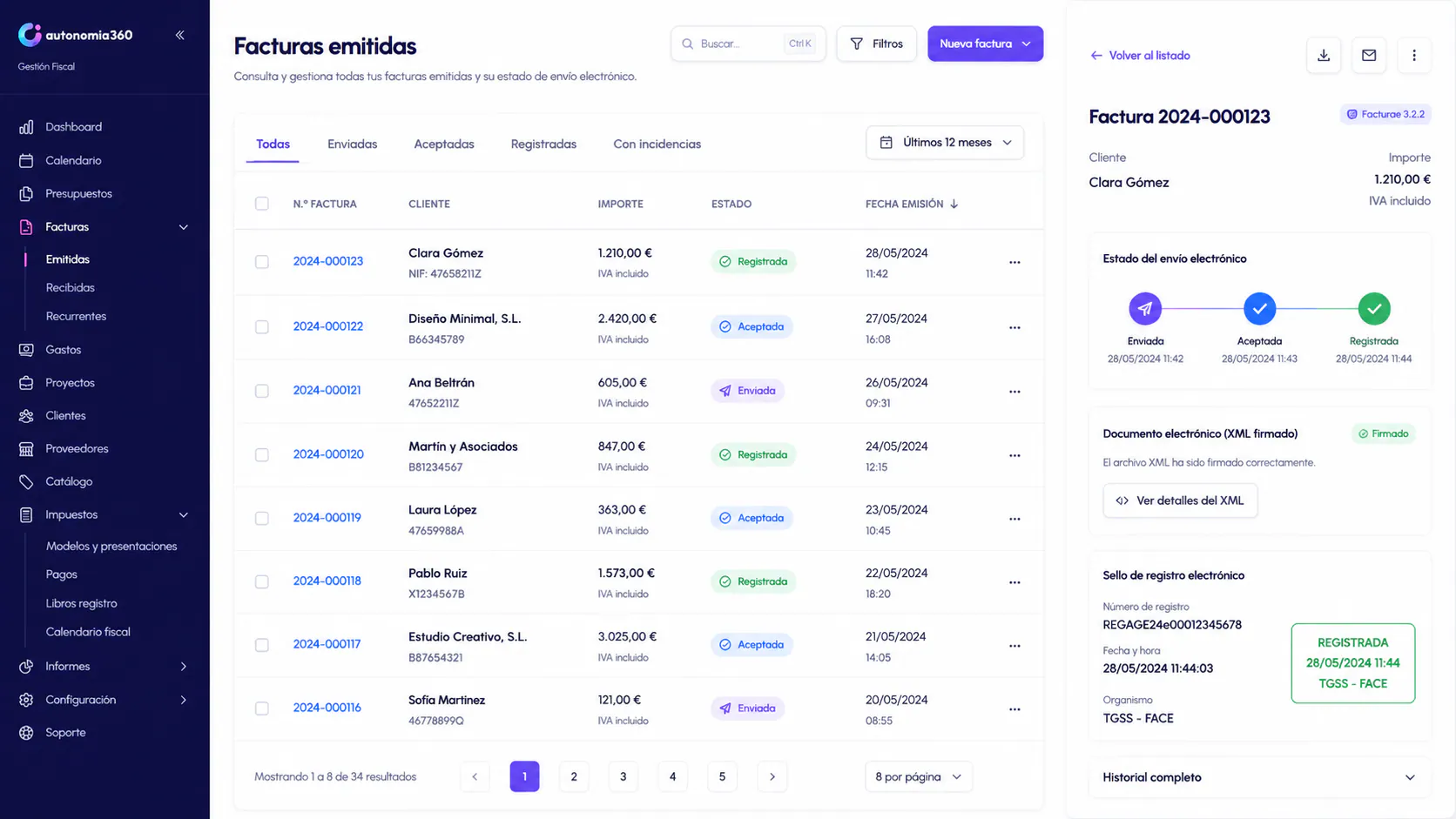
You'll know whether your invoice has been delivered, accepted, rejected or paid. No more chasing payment in the dark with emails that go unanswered.
Legal retention and traceability
E-invoices have to be kept for the period set by law. autonomia360 archives them and keeps them accessible and exportable at any time.
The real difference
PDF by email vs e-invoice
No jargon
You create the invoice. We handle the rest
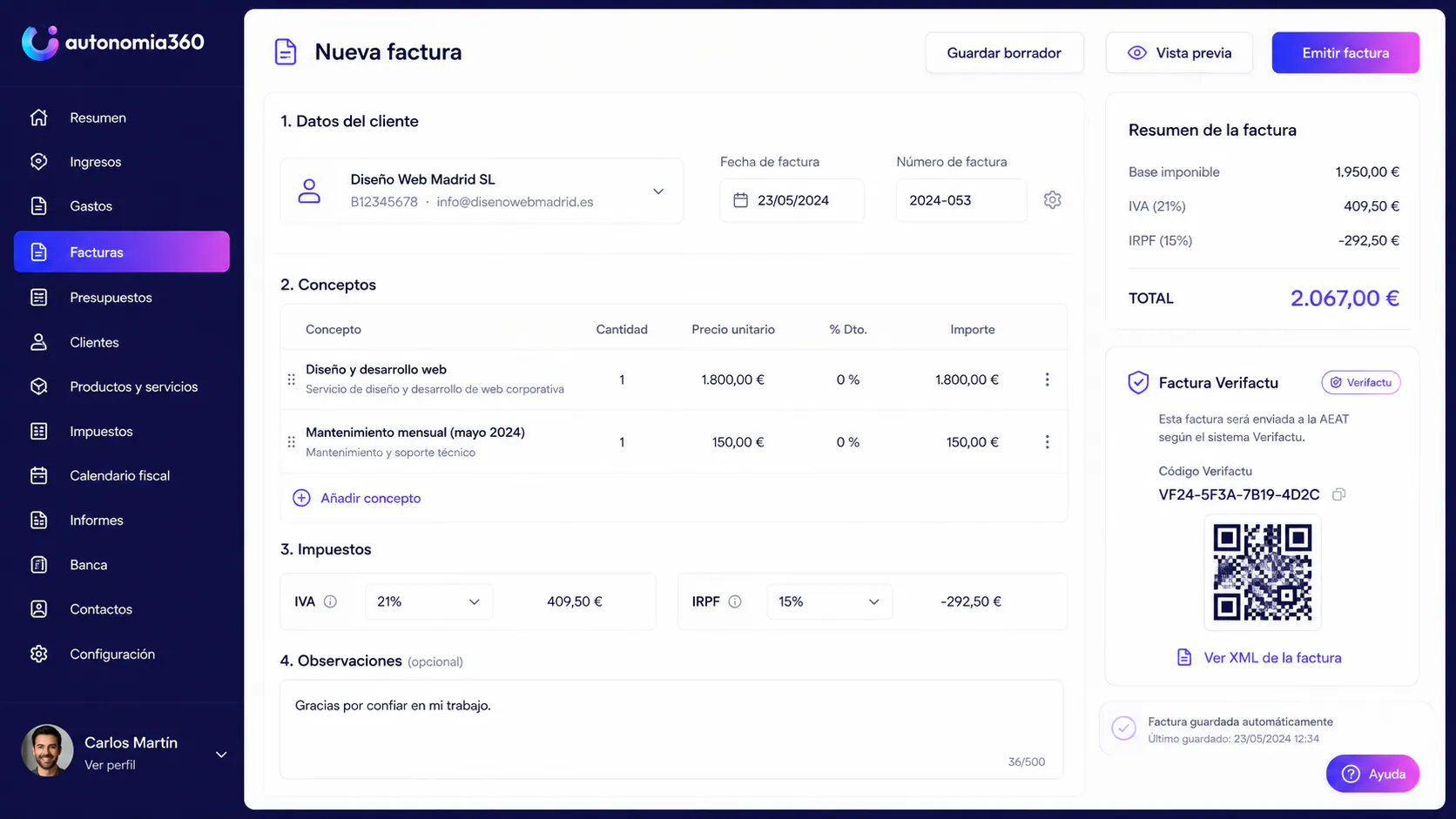
You don't have to learn what a Facturae 3.2.x file is, or how FACe works, or worry about whether your client accepts UBL. You fill in the invoice details as usual and we convert it to the right format.
If the invoice is for a public body, we send it through FACe. If it's for a private company, through the right channel. And you can see the status at all times: whether it arrived, whether it was accepted, whether there's a problem.
Frequently asked questions about e-invoicing
What is an e-invoice?
It's an invoice issued in a structured digital format (Facturae 3.2.x or UBL 2.1) that both sender and recipient can process automatically. It isn't the same as sending a PDF by email: a PDF isn't structured and can't be read directly by bookkeeping systems.
When will it be mandatory for freelancers?
The Crea y Crece Law phases the obligation in and Royal Decree 238/2026 (31 March 2026) sets out the system. The deadlines run from the entry into force of the ministerial order completing the public platform: 12 months for companies with turnover above €8 million and 24 months for all other companies and freelancers. In the meantime, the Spanish Tax Agency plans to open a test platform from October 2026. autonomia360 is ready for it.
How does it differ from VeriFactu?
They're different but complementary obligations. VeriFactu guarantees that your invoices are verifiable and tamper-proof from the Spanish Tax Agency's point of view (record integrity). E-invoicing governs the format and exchange of the invoice between businesses (B2B interoperability). autonomia360 covers both.
Do I have to learn Facturae or FACe?
No. You create the invoice as usual — client, description, amount — and autonomia360 converts it to the right format, sends it to your client or to the relevant public platform and tracks its status. The technical format is our problem, not yours.
What is FACe?
FACe (the General Entry Point for Electronic Invoices) is the government platform for sending e-invoices to public bodies. It's already mandatory when you invoice the public sector. The Crea y Crece Law extends the obligation to the private sector too (companies and freelancers invoicing each other).
Does it affect me if I only invoice final consumers (B2C)?
The Crea y Crece Law applies to transactions between companies and freelancers (B2B). If you only sell to private consumers, B2B e-invoicing doesn't affect you directly, although VeriFactu may still apply depending on your software.
Official sources: Act 18/2022 on business creation and growth (BOE) · Royal Decree 238/2026, business-to-business e-invoicing (BOE)
Updated on .
Be ready for e-invoicing without thinking about it
Invoice with autonomia360 and comply from day one, with no jargon and nothing to set up.